Sunroom lighting combines natural daylight, artificial illumination, comfort, energy efficiency, glare control, and visual atmosphere to create a usable living space throughout every season. The best sunroom lighting systems balance sunlight exposure, layered lighting fixtures, nighttime usability, heat management, furniture protection, and indoor comfort without making the room feel overly harsh or dim.
Unlike traditional living rooms, sunrooms contain extensive glass surfaces that constantly change the interior brightness depending on weather, season, window direction, and time of day. A room that feels bright and cozy during winter mornings may suddenly become uncomfortably hot during summer afternoons. Because of this, lighting design in a sunroom should never be treated as a simple decorative upgrade. It directly affects functionality, energy efficiency, mood, productivity, plant health, and long-term furniture durability.
Modern sunroom lighting plans usually combine:
- Natural daylight management
- Ambient ceiling lighting
- Task lighting
- Accent lighting
- Smart dimming systems
- Seasonal lighting adjustments
- Energy-efficient LED fixtures
- UV protection strategies
Lighting also connects closely with other parts of the broader sunroom ecosystem. Sunlight behavior depends heavily on window placement and glazing performance. Heat buildup changes according to insulation quality and heating/cooling efficiency. Flooring materials influence glare intensity and light reflection. Furniture fabrics react differently to UV exposure and artificial light temperatures. This is why the highest-performing sunrooms are designed as integrated environments rather than isolated design decisions.
A complete Sunroom Master Authority Guide usually explains how lighting, windows, flooring, insulation, furniture, and climate control systems work together to improve long-term comfort and usability.
Why Does Sunroom Lighting Matter So Much?
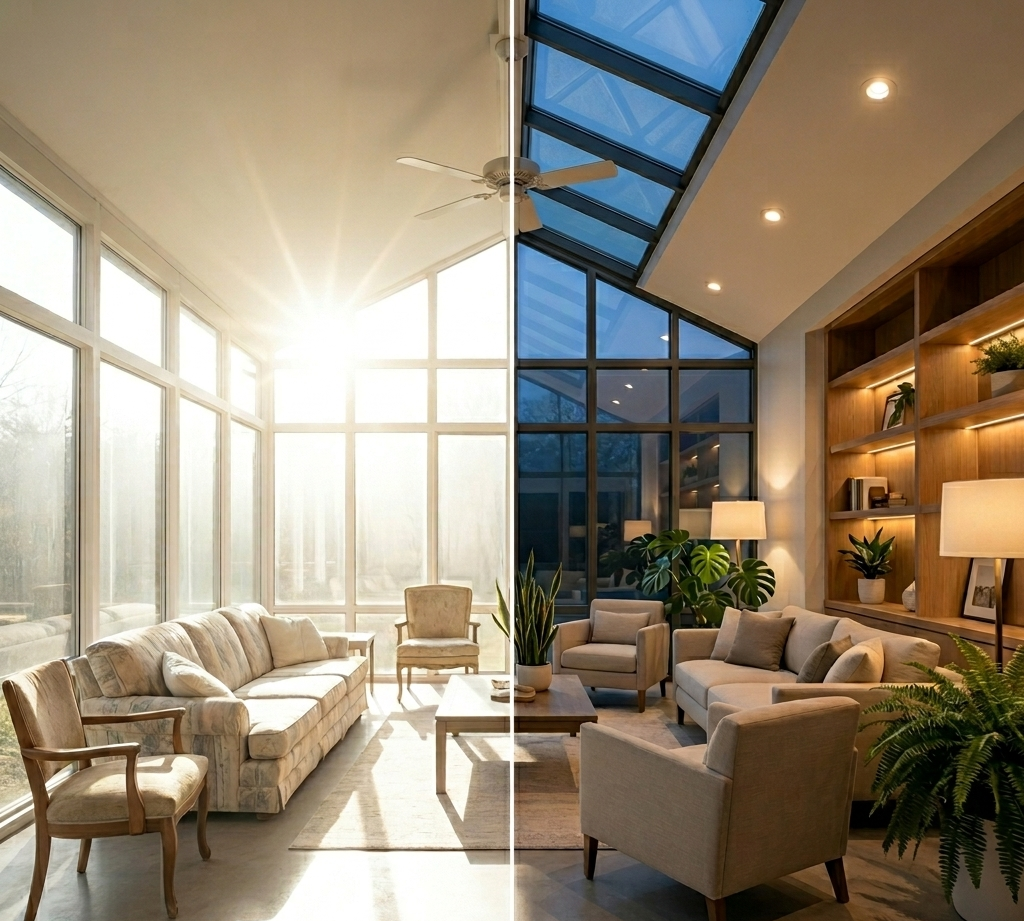
Lighting affects almost every aspect of a sunroom’s performance. Since sunrooms contain large glass panels and receive higher daylight exposure than standard indoor spaces, small lighting mistakes become much more noticeable over time.
Poor lighting design often creates:
- Excessive glare
- Heat buildup
- Uneven brightness
- Eye strain
- Furniture fading
- Reflection problems
- Poor nighttime usability
- High energy consumption
Many homeowners initially focus only on maximizing natural sunlight. While daylight is one of the main benefits of a sunroom, uncontrolled sunlight can eventually create discomfort instead of improving the space.
For example:
- Afternoon sun may overheat furniture surfaces
- Strong glare can make reading difficult
- UV exposure may fade upholstery fabrics
- Excessively bright windows can create visual fatigue
- Harsh lighting contrasts reduce relaxation
The best sunroom lighting plans improve:
- Comfort throughout the day
- Evening usability
- Mood and atmosphere
- Energy efficiency
- Functional flexibility
- Plant growth conditions
- Furniture longevity
- Seasonal adaptability
Lighting also changes how the room is emotionally perceived. A poorly lit sunroom may feel sterile, overly exposed, or uncomfortable at night. A properly layered lighting system creates warmth, depth, and visual balance even after sunset.
Modern sunrooms often serve multiple purposes, including:
- Reading spaces
- Entertainment rooms
- Indoor gardens
- Dining areas
- Remote workspaces
- Relaxation zones
Each use case requires slightly different lighting priorities. This is why layered lighting almost always performs better than relying on a single fixture.
What Types of Lighting Work Best in a Sunroom?
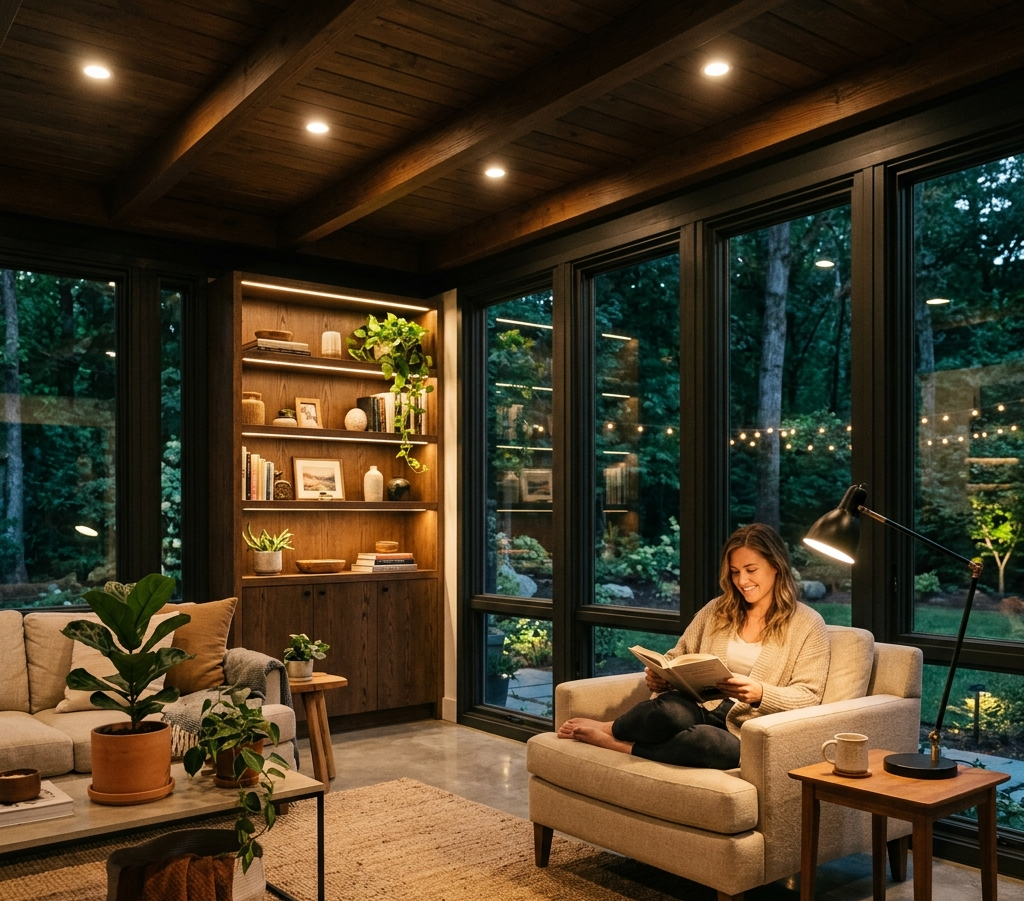
The best sunroom lighting systems combine multiple lighting layers to create balanced illumination throughout the room. Depending only on one overhead light fixture usually creates flat lighting and harsh shadows.
Professional interior lighting plans generally divide lighting into three categories:
| Lighting Type | Main Purpose | Best Use |
| Ambient Lighting | General room brightness | Evening illumination |
| Task Lighting | Focused visibility | Reading and work |
| Accent Lighting | Decorative atmosphere | Plants and décor |
Combining all three creates a more adaptable environment.
Ambient Lighting
Ambient lighting provides the overall brightness level across the room. It acts as the foundational lighting layer that supports visibility after sunset or during cloudy weather.
Popular ambient lighting options include:
- Recessed ceiling lights
- Flush mount fixtures
- Semi-flush ceiling lights
- Pendant lighting
- LED ceiling panels
- Cove lighting systems
Recessed lighting is particularly popular in modern sunrooms because it distributes light evenly without visually blocking glass ceilings or large windows.
Well-designed ambient lighting should:
- Eliminate dark corners
- Avoid harsh hotspots
- Maintain even brightness
- Work with dimmer systems
- Support layered lighting
A common mistake is installing excessively bright overhead fixtures without considering how reflective glass walls amplify brightness at night.
Balanced ambient lighting should feel soft rather than overpowering.
Task Lighting
Task lighting improves visibility for specific activities.
Common task lighting examples include:
- Reading lamps
- Desk lamps
- Adjustable floor lamps
- Swing-arm sconces
- Under-shelf LEDs
- Focused pendant lights
Task lighting becomes especially important in multifunction sunrooms used for:
- Reading
- Remote work
- Crafting
- Dining
- Sewing
- Plant care
Without proper task lighting, evening usability often becomes limited even if daytime sunlight is strong.
Adjustable task lighting usually works best because sunlight conditions constantly change throughout the day.
For example:
- Morning sunlight may provide enough brightness naturally
- Evening conditions may require focused reading light
- Cloudy weather may reduce visibility dramatically
Task lighting improves flexibility without forcing the entire room to become overly bright.
Accent Lighting
Accent lighting creates atmosphere and visual depth. It softens the large reflective surfaces common in glass-heavy sunrooms while making the room feel more welcoming after sunset.
Popular accent lighting strategies include:
- LED strip lighting
- Plant uplighting
- Shelf lighting
- Decorative lanterns
- Wall washers
- Table lamps
- Cove lighting
Accent lighting works especially well for highlighting:
- Indoor plants
- Architectural details
- Decorative shelving
- Artwork
- Textured walls
- Ceiling beams
At night, accent lighting prevents sunrooms from feeling overly dark or visually empty.
Soft layered accent lighting also reduces mirror-like window reflections that often occur when a single bright ceiling light dominates the room.
How Does Natural Light Affect Sunroom Lighting Design?
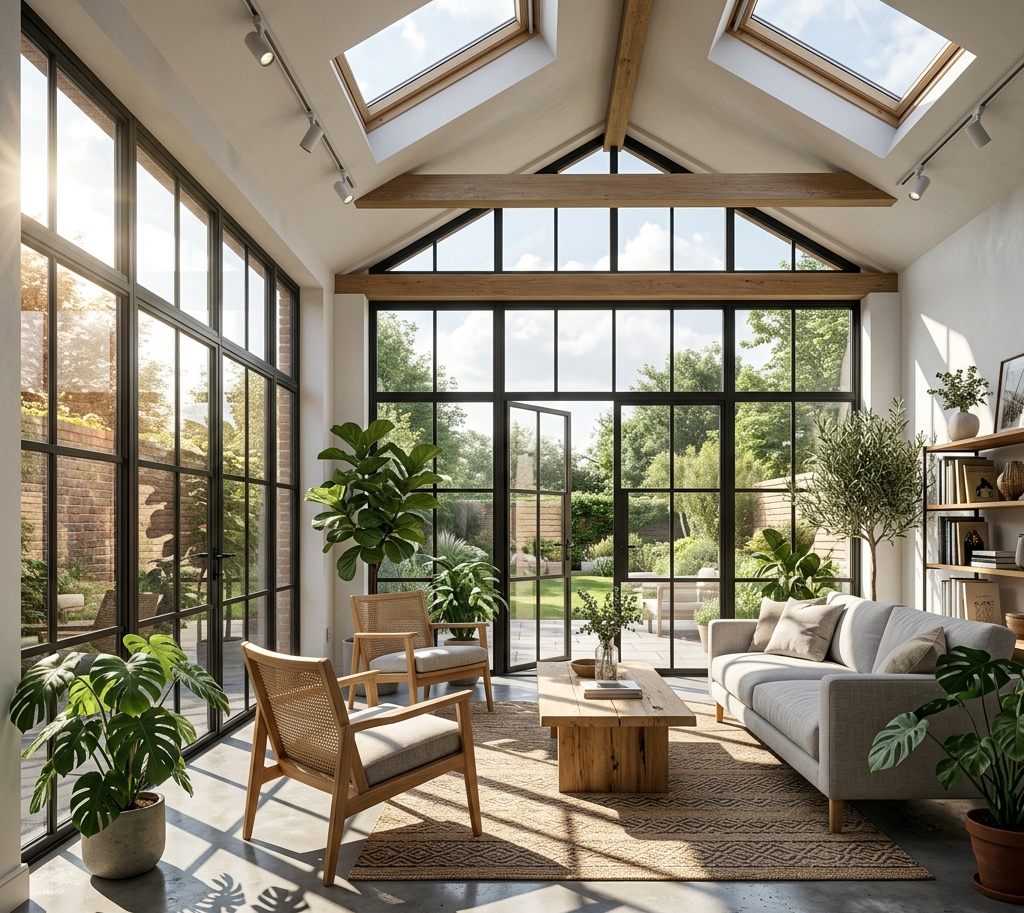
Natural daylight is the defining feature of a sunroom, but controlling sunlight properly matters more than simply maximizing brightness.
Daylight performance depends heavily on:
- Window orientation
- Glass technology
- Roof design
- Geographic location
- Seasonal sunlight angles
- Exterior shade
- Nearby buildings or trees
Sunlight behaves differently depending on window direction.
| Orientation | Typical Light Behavior |
| North-facing | Soft consistent brightness |
| South-facing | Strong all-day exposure |
| East-facing | Bright morning sunlight |
| West-facing | Intense afternoon glare |
South-facing sunrooms generally provide the strongest daylight exposure throughout the year. West-facing rooms often experience the most difficult glare and heat buildup during summer afternoons.
Many homeowners mistakenly believe that maximum sunlight automatically creates a better sunroom.
In reality, excessive direct sunlight often causes:
- Overheating
- Eye fatigue
- Furniture fading
- Floor discoloration
- Plant stress
- Screen reflection problems
Balanced daylight management is far more important than raw brightness.
This is why sunroom windows play such a critical role in lighting quality. Modern glazing technologies dramatically affect how sunlight behaves inside the space.
Important window features include:
- Low-E coatings
- UV filtering
- Double-pane insulation
- Solar-control glass
- Tinted glazing
- Reflective coatings
A dedicated Sunroom Windows Guide usually explains how glazing systems influence glare control, thermal performance, UV exposure, and daylight quality.
What Color Temperature Works Best for Sunroom Lighting?
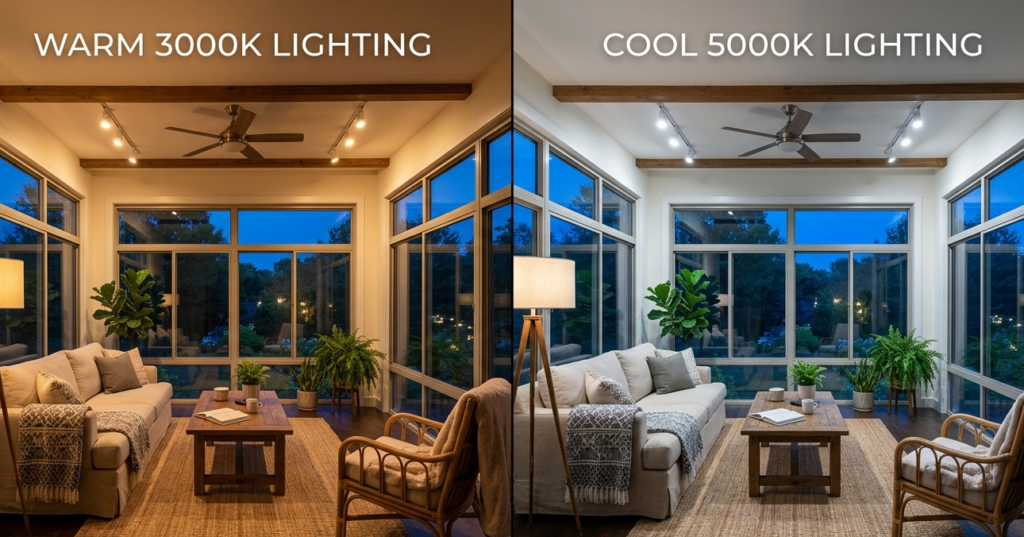
Color temperature significantly changes the mood and usability of a sunroom.
Lighting temperature is measured in Kelvin (K):
| Color Temperature | Appearance |
| 2700K–3000K | Warm and cozy |
| 3500K–4000K | Balanced natural light |
| 5000K+ | Cool daylight appearance |
Warm white lighting usually performs best in relaxation-focused sunrooms because it softens reflective surfaces and creates a cozy evening atmosphere.
Cooler lighting works better for:
- Reading
- Productivity
- Detailed hobbies
- Remote work
- Craft projects
Most high-performing sunrooms use dimmable LEDs that allow brightness and warmth adjustments throughout the day.
For example:
- Cooler lighting during daytime productivity
- Warmer lighting during evening relaxation
A common mistake is installing extremely cool white bulbs inside highly reflective spaces. Cool lighting may appear harsh when reflected across large glass walls and polished surfaces.
Warm lighting generally improves comfort at night because it reduces visual strain and creates smoother transitions between indoor and outdoor darkness.
Are LED Lights the Best Option for Sunrooms?
Yes. LED lighting is generally the best lighting solution for modern sunrooms because it combines efficiency, low heat output, long lifespan, and flexible lighting control.
Compared to incandescent bulbs, LEDs generate significantly less heat. This matters because sunrooms already experience higher solar heat gain during warmer seasons.
Major LED advantages include:
- Lower electricity costs
- Reduced heat production
- Long lifespan
- Dimming compatibility
- Smart home integration
- Flexible color temperatures
- Better energy efficiency
LED strip lighting has become especially popular in modern sunroom design because it creates soft indirect illumination without visually cluttering the room.
Popular LED strip locations include:
- Under benches
- Shelf edges
- Ceiling coves
- Plant displays
- Accent borders
LED lighting also works exceptionally well alongside heating and cooling systems. Traditional incandescent bulbs can increase cooling demand during summer by generating additional heat inside already sun-exposed spaces.
Efficient LEDs help maintain more stable interior temperatures, especially in heavily insulated sunrooms.
This relationship between lighting efficiency and climate performance is often discussed further in detailed Heating and Cooling Guides focused on year-round sunroom comfort.
Are Recessed Lights Good for Sunrooms?
Recessed lighting is one of the most effective and visually clean lighting options for sunrooms. Since glass-heavy spaces benefit from minimal ceiling clutter, recessed fixtures help maintain openness while distributing light evenly.
Benefits of recessed lighting include:
- Minimal visual obstruction
- Clean modern appearance
- Wide brightness distribution
- Excellent dimmer compatibility
- Works well with low ceilings
- Flexible placement options
However, recessed lighting alone rarely creates the best atmosphere.
Sunrooms illuminated only by recessed downlights may feel:
- Flat
- Sterile
- Overly bright
- Lacking warmth
The best designs combine recessed lighting with:
- Floor lamps
- Accent lighting
- Decorative pendants
- Wall sconces
- Table lamps
Fixture spacing also matters heavily.
Poor recessed layouts often create:
- Uneven brightness
- Reflection hotspots
- Dark corners
- Harsh glare
Balanced layouts generally outperform excessive fixture density.
For larger sunrooms, layered lighting almost always produces better results than relying exclusively on ceiling fixtures.
How Can You Reduce Glare in a Sunroom?
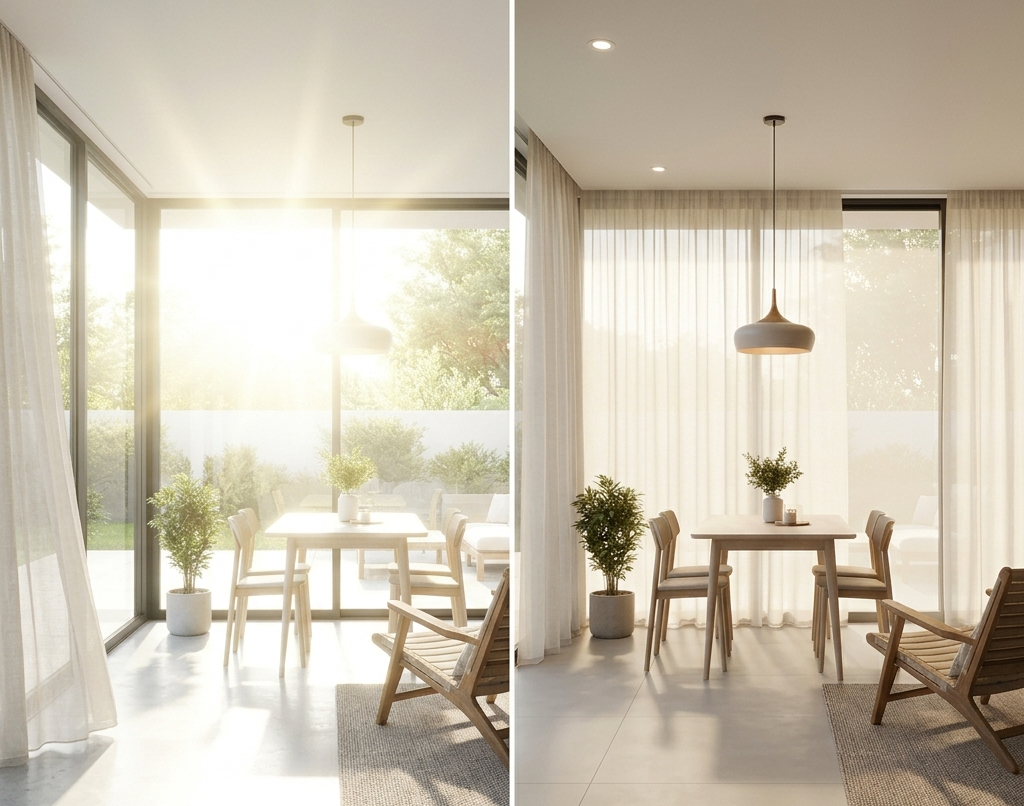
Glare is one of the most common problems in sunrooms because sunlight reflects aggressively from glass surfaces, flooring materials, and glossy décor.
Glare becomes especially severe when combined with:
- West-facing windows
- White walls
- Reflective flooring
- Dark screens
- Minimal shading systems
Common glare symptoms include:
- Eye fatigue
- Screen visibility problems
- Excessive brightness
- Difficulty reading
- Reduced comfort during afternoons
Effective glare reduction strategies include:
- Sheer curtains
- Solar shades
- Matte flooring finishes
- UV-filtering window film
- Layered indirect lighting
- Strategic furniture placement
Flooring materials strongly influence glare intensity.
Highly reflective flooring such as:
- Polished tile
- Glossy stone
- Reflective laminate
often amplifies sunlight aggressively during peak daylight hours.
Matte flooring options generally create more balanced visual comfort.
Popular low-glare flooring materials include:
- Matte hardwood
- Textured vinyl plank
- Natural wood-look surfaces
- Soft stone finishes
This is why flooring and lighting should always be planned together rather than separately. A detailed Sunroom Flooring Guide often explains how floor color, texture, and reflectivity affect brightness balance and visual comfort.
Another common mistake is placing televisions or computer monitors directly opposite large windows. This usually creates severe daytime reflections.
Strategic layout planning often reduces glare more effectively than increasing artificial brightness.
What Lighting Fixtures Look Best in a Sunroom?
The best sunroom lighting fixtures depend heavily on the architectural style of the room.
Popular fixture styles include:
| Sunroom Style | Best Fixtures |
| Modern | Recessed LEDs, linear pendants |
| Farmhouse | Lantern pendants, rustic chandeliers |
| Coastal | Woven fixtures, airy pendants |
| Scandinavian | Minimal matte fixtures |
| Traditional | Classic chandeliers and sconces |
| Boho | Rattan pendants and warm lamps |
Large heavy chandeliers may overwhelm smaller sunrooms because glass-heavy spaces benefit from openness and visual lightness.
Materials that commonly perform well include:
- Matte black metal
- Brushed brass
- Frosted glass
- Natural wood
- Linen shades
- Rattan textures
These materials soften reflections while creating warmer visual balance.
Fixture selection should also coordinate with furniture layout and upholstery choices.
For example:
- Dark furniture absorbs more light
- Glossy tables increase reflections
- Light neutral fabrics brighten the room
- Heavy furniture may visually darken corners
Furniture placement changes how brightness distributes throughout the room. Large sectionals, shelving units, and textured upholstery all influence lighting performance.
A dedicated Sunroom Furniture Guide often explains how furniture arrangement affects brightness, openness, and overall comfort.
Can Smart Lighting Improve a Sunroom?
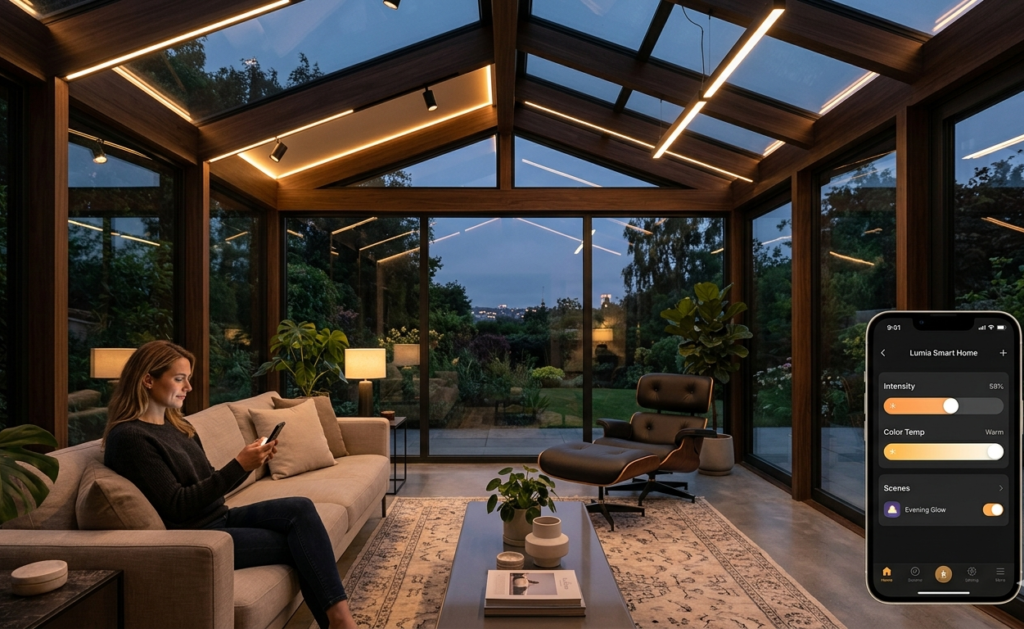
Yes. Smart lighting systems work exceptionally well in sunrooms because daylight conditions constantly change throughout the day and across different seasons.
Modern smart systems can automate:
- Brightness levels
- Dimming schedules
- Color temperature shifts
- Voice controls
- Motion activation
- Energy management
Popular smart lighting features include:
- Sunset automation
- Circadian rhythm lighting
- Smartphone control
- Seasonal lighting presets
- Adaptive brightness
For example:
- Bright neutral lighting during daytime work
- Warm dim lighting during evening relaxation
Smart systems improve flexibility without requiring constant manual adjustments.
This becomes especially valuable in rooms with highly variable sunlight exposure. Morning brightness may feel completely different from late afternoon conditions depending on weather and season.
Smart dimmers also improve energy efficiency by reducing unnecessary power usage during naturally bright periods.
What Lighting Works Best for Indoor Plants in a Sunroom?
Many sunrooms double as indoor garden spaces because they provide stronger natural light than most traditional rooms.
However, plant lighting performance depends heavily on:
- Window orientation
- Seasonal daylight changes
- Glass coatings
- Exterior shade
- UV filtering
- Climate conditions
During winter months, some sunrooms may not provide enough light for tropical or high-light plants.
Supplemental plant lighting options include:
- Full-spectrum LED grow lights
- Under-shelf grow strips
- Pendant grow lights
- Adjustable grow lamps
- Smart timed grow systems
Modern full-spectrum LEDs are far more attractive than older purple grow lights while still supporting healthy plant growth.
Plant lighting should balance:
- Light intensity
- Heat generation
- Energy efficiency
- Visual appearance
Plant health also depends on stable temperatures. Strong lighting alone cannot compensate for poor insulation or uncontrolled temperature fluctuations.
This is why insulation performance directly affects indoor gardening success inside sunrooms. A detailed Sunroom Insulation Guide usually explains how thermal efficiency influences condensation, plant stability, sunlight performance, and year-round comfort.
How Does Seasonal Lighting Change a Sunroom?
Seasonal sunlight changes dramatically affect how a sunroom feels throughout the year.
Summer conditions often create:
- Intense brightness
- Heat buildup
- Strong glare
- UV stress
Winter conditions usually create:
- Lower daylight duration
- Cooler atmosphere
- Darker corners
- Reduced brightness
The same room may feel completely different depending on seasonal sun angles.
Summer Lighting Adjustments
During summer, lighting plans should focus on:
- Reducing glare
- Managing heat
- Lowering contrast imbalance
- Improving airflow visibility
Helpful strategies include:
- Solar roller shades
- Indirect lighting
- Matte surfaces
- Dimmable fixtures
- UV-filtering treatments
Winter Lighting Adjustments
During winter, the focus usually shifts toward:
- Increasing warmth perception
- Improving ambient brightness
- Eliminating dark corners
- Creating cozy atmosphere
Helpful winter lighting additions include:
- Warm floor lamps
- Accent lighting
- Soft table lamps
- Layered LEDs
- Reflective décor accents
Many homeowners underestimate how dramatically sunlight angles shift between seasons.
Lighting that feels comfortable during winter mornings may become overpowering during summer afternoons.
Flexible lighting systems adapt much better throughout the year.
What Are the Biggest Sunroom Lighting Mistakes?
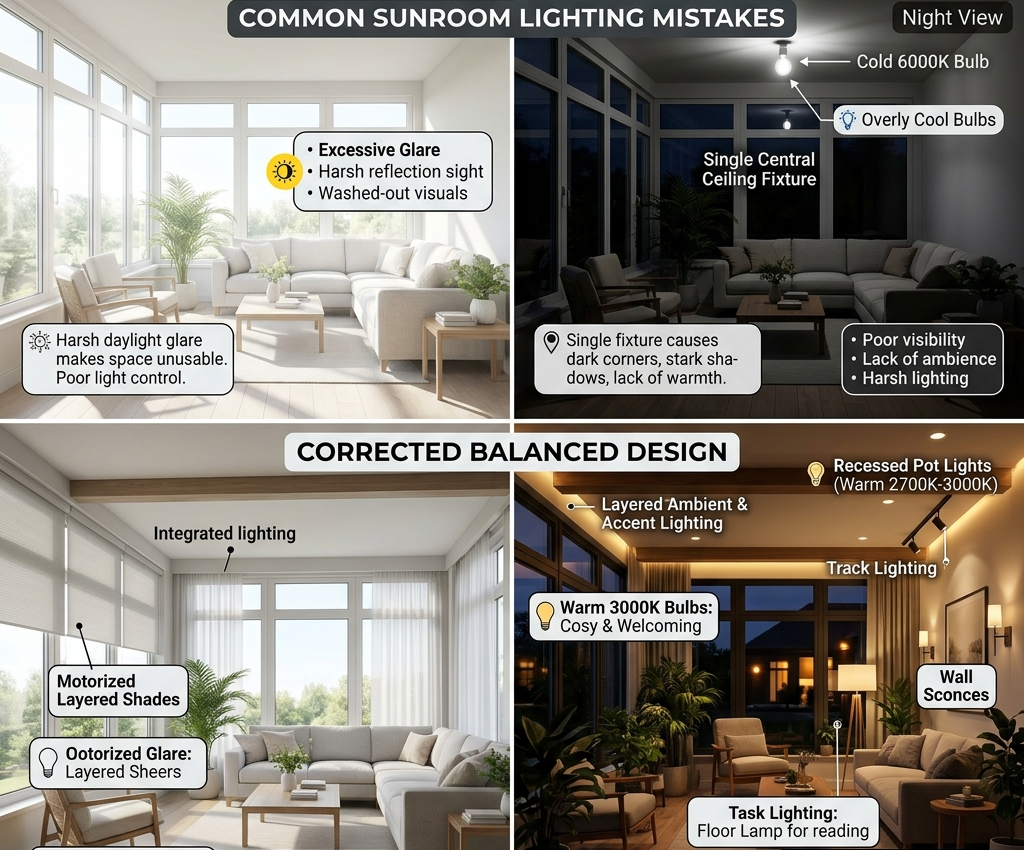
Most poorly designed sunrooms suffer from lighting imbalance rather than insufficient brightness.
Common mistakes include:
- Using only one ceiling fixture
- Ignoring glare management
- Installing overly cool bulbs
- Poor dimmer integration
- Excessive reflective surfaces
- Ignoring seasonal sunlight changes
- Weak nighttime lighting layers
- Poor furniture placement
Another major mistake is designing only for daytime use.
Many sunrooms become uncomfortable at night because lighting was never layered properly. Large dark windows can create strong mirror-like reflections if lighting is concentrated into a single bright source.
Balanced layered lighting creates better atmosphere and comfort.
How Should You Layer Lighting in a Sunroom?
Layered lighting creates flexibility, depth, and comfort while adapting to changing daylight conditions.
The best approach combines three lighting layers.
Layer 1 — Ambient Lighting
Provides overall room brightness.
Examples include:
- Recessed LEDs
- Ceiling fixtures
- Cove lighting
Layer 2 — Task Lighting
Supports functionality.
Examples include:
- Reading lamps
- Desk lights
- Adjustable sconces
Layer 3 — Accent Lighting
Creates atmosphere and visual warmth.
Examples include:
- LED strips
- Plant uplighting
- Decorative lanterns
- Shelf lighting
This layered structure allows the room to adapt for:
- Morning relaxation
- Afternoon productivity
- Evening entertaining
- Winter comfort
- The best sunroom lighting plans treat daylight and artificial lighting as one integrated system rather than separate design decisions.
Real-World Sunroom Lighting Example
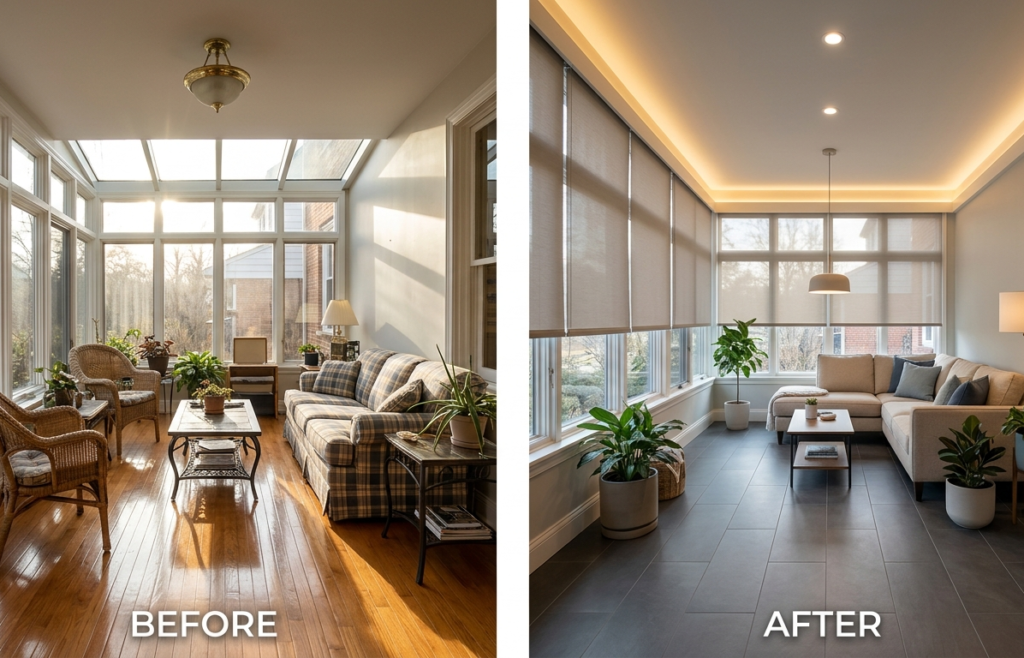
A west-facing glass sunroom originally experienced:
- Severe afternoon glare
- Overheating
- Television reflections
- Faded cushions
- Uneven nighttime lighting
The redesign included:
- Solar roller shades
- Matte flooring
- 3000K dimmable LEDs
- Warm floor lamps
- LED shelf lighting
- Layered accent fixtures
Results after redesign included:
- Lower glare discomfort
- Better nighttime usability
- Reduced eye strain
- Improved furniture protection
- More balanced seasonal comfort
- Lower cooling demand
This example demonstrates why successful sunroom lighting depends on the combined relationship between:
- Windows
- Flooring
- Furniture
- Insulation
- Climate control
- Artificial lighting
rather than lighting fixtures alone.
Frequently Asked Questions
What is the best lighting for a sunroom?
Layered LED lighting with ambient, task, and accent fixtures usually works best because it balances natural daylight with comfortable nighttime illumination.
Are recessed lights enough for a sunroom?
Usually no. Recessed lights work best when combined with lamps, sconces, and accent lighting for warmth and visual depth.
What bulb color works best in sunrooms?
Warm white 2700K–3000K lighting works best for relaxation, while 3500K–4000K performs better for productivity and reading.
Can too much sunlight damage a sunroom?
Yes. Excessive direct sunlight can fade furniture, overheat interiors, increase glare, and stress indoor plants.
Are LED lights good for sunrooms?
Yes. LEDs produce less heat, use less electricity, last longer, and integrate well with dimmers and smart systems.
How do I reduce glare in a sunroom?
Use solar shades, matte flooring, indirect lighting, UV-filtering glass, and strategic furniture placement to reduce harsh reflections.
Should sunrooms have dimmer switches?
Yes. Dimmers improve flexibility throughout changing daylight conditions and create more comfortable evening lighting.
Do plants in sunrooms need grow lights?
Sometimes. Winter conditions, UV-coated glass, or shaded orientations may reduce natural light enough to require supplemental grow lighting.